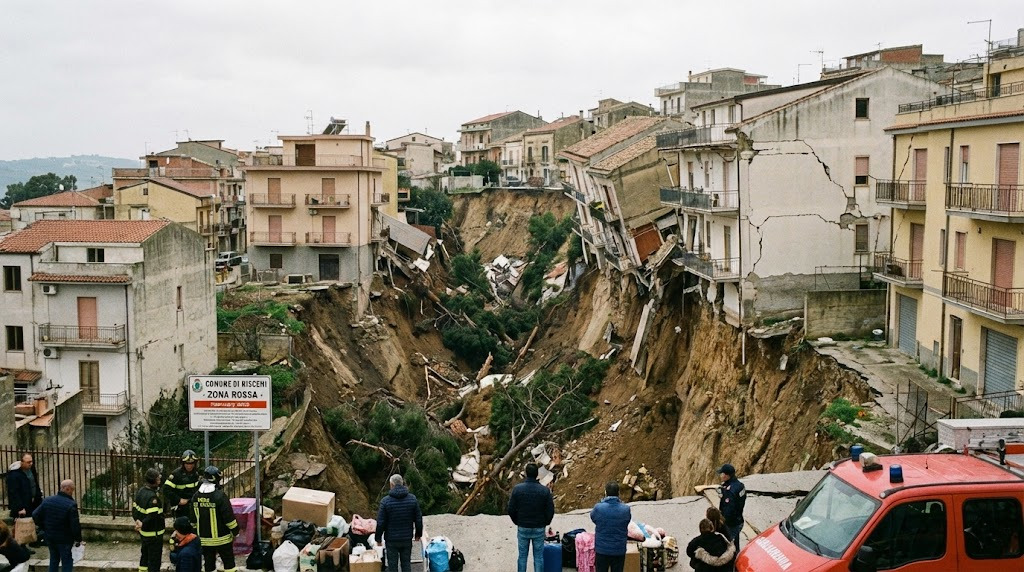
Landslide in Niscemi, Sicily 2026 — Complete Overview & Implications / Frana di Niscemi, Sicilia 2026 – Dettagli Completi dell’Emergenza
Nel gennaio 2026 la cittadina di Niscemi (provincia di Caltanissetta, Sicilia) è stata colpita da una imponente frana causata da precipitazioni eccezionali legate al Ciclone Harry. Il fenomeno ha interessato un fronte di terreno lungo oltre 4 km e profondamente instabile, generando una crisi geologica in rapida evoluzione.
🌧️ Cosa è accaduto
- Dopo giorni di piogge intense e persistenti, il terreno argilloso e sabbioso che costituisce i pendii sotto Niscemi ha ceduto, dando inizio a una frana su larga scala.
- Oltre 1 500 persone sono state evacuate da aree considerate pericolose, con scuole chiuse e zone dichiarate “red zone” da protezione civile.
- Parti di vie di comunicazione e di edifici sono state danneggiate o rese inabitabili, e alcune porzioni di terreno continuano a muoversi verso la pianura alluvionale di Gela.
🏠 Impatto infrastrutturale e sociale
- Le abitazioni in prossimità della frana sono rimaste precarie o pericolanti, con automobili e strutture letteralmente sospese sull’orlo di baratri formatisi dal cedimento.
- Le autorità hanno predisposto zone di esclusione fino a 150 m dalla linea di frana per prevenire ulteriori rischi.
- Il governo italiano ha decretato lo stato di emergenza per Sicilia, Sardegna e Calabria, stanziando fondi d’intervento immediato e supporto alle famiglie colpite.
📉 Cause principali
- Il terreno nella zona di Niscemi è storicamente geologicamente instabile: composto da strati ricchi di argilla e sabbia soggetti a erosione.
- L’accumulo di pioggia ha saturato il suolo, riducendo la coesione e aumentando la probabilità di cedimenti improvvisi delle pendici.
📈⚙️ WikiLogs: Come poteva supportare l’emergenza di Niscemi
🧠 WikiLogs – Social per la sostenibilità ambientale
Il progetto WikiLogs è una piattaforma sociale per l’ambientalismo che combina crowdsourcing, citizen science e tecnologie IA per monitorare, analizzare e prevedere fenomeni ambientali in tempo reale.
👥 Citizen Science – Coinvolgimento della comunità
WikiLogs permette ai cittadini di:
- Caricare segnalazioni geolocalizzate di criticità territoriali (ad es. cedimenti, crepe nel terreno).
- Documentare e condividere foto, dati e testimonianze dal campo in tempo reale.
- Partecipare attivamente alla raccolta e validazione dei dati territoriali per creare mappe dettagliate degli eventi in corso.
📊 Analisi predittiva con AI
WikiLogs integra modelli avanzati di intelligenza artificiale per:
- Analizzare dati storici e osservazioni correnti su clima, pioggia, suolo e morfologia.
- Generare previsioni sul rischio di fenomeni come frane e alluvioni, identificando pattern e condizioni potenzialmente pericolose prima che diventino emergenze.
🚨 Supporto in emergenza
In uno scenario come quello di Niscemi, WikiLogs avrebbe potuto:
- Offrire mappe dinamiche in tempo reale delle aree a rischio basate sulle segnalazioni dei residenti e dati ufficiali.
- Consentire un monitoraggio costante e distribuito del terreno instabile grazie alla partecipazione dei cittadini.
- Fornire indicatori predittivi utili a protezione civile e amministrazioni per anticipare evacuazioni o interventi di mitigazione.
🤝 Collaborazione tra comunità e istituzioni
La combinazione di citizen science + AI + open data crea un ecosistema in cui cittadini, amministrazioni e ricercatori lavorano insieme per:
- Migliorare la consapevolezza territoriale.
- Ridurre i tempi di risposta.
- Sostenere decisioni informate basate su dati in tempo reale.
🌍📍 Massive Landslide in Niscemi, Sicily 2026 – Full Overview and Lessons
🇬🇧 Landslide in Niscemi, Sicily – Detailed Emergency Report
In late January 2026, the hill-top town of Niscemi in southern Sicily experienced a major landslide triggered by intense rainfall associated with Storm Harry. The landslide comprised a long section of unstable hillside that collapsed toward the surrounding plain, causing widespread geological damage and creating an ongoing emergency.
🌧️ What Happened
The landslide was caused by continuous heavy rain saturating the ground, weakening the soil and causing large sections of slope to give way. The affected area stretched approximately four kilometres across the hillside, and ground displacement of several metres was observed as the situation developed.
🏘️ Evacuations and Human Impact
Authorities ordered the evacuation of roughly 1,500 residents from neighbourhoods at risk, establishing safety zones and relocating affected families to temporary housing. No confirmed fatalities have been reported, but many homes were deemed uninhabitable or at extreme risk as the unstable terrain continued to shift.
🚧 Infrastructure and Daily Life Disruption
- Roads connecting Niscemi to surrounding towns were damaged or cut off.
- Schools and public services were closed amid ongoing assessments of building safety.
- Large cracks and chasms formed in the terrain, leaving vehicles and structures precariously perched on the edge of newly formed cliffs.
The overall disruption to daily life has been significant, with long-term stability concerns remaining a priority for local authorities.
📊 Response and Government Actions
The Italian government declared a state of emergency for Sicily and neighbouring regions, mobilising civil protection teams and allocating emergency funds to assist affected communities. Local, regional, and national officials are coordinating geological monitoring, evacuation logistics, and infrastructure support as the landslide continues moving slowly toward the plain below.
📈⚙️ How the WikiLogs Project Could Have Supported the Niscemi Emergency
🧠 What WikiLogs Is
WikiLogs is a social platform for environmental sustainability built around the principles of crowdsourcing and citizen science. It enables community members to report observations, share environmental data, and work together with scientists and institutions to monitor changing conditions. The platform fosters collaboration between experts and everyday participants, creating a networked approach to understanding environmental risks.
👥 Citizen Science at the Core
Citizen science through WikiLogs involves non-expert individuals in collecting, sharing, and analysing environmental data. Users can contribute observations from their local environment, which helps build extensive datasets over time and space, while also increasing public awareness of ecological issues. This approach transforms ordinary people into active participants in environmental research and monitoring.
🤖 AI and Predictive Capability
By combining citizen-generated data with AI-driven analysis, WikiLogs can help detect patterns and emerging risks earlier than traditional monitoring alone. Advanced models can process large amounts of data — such as rainfall intensity, soil moisture levels, and geolocation reports — to support predictive insights about environmental hazards. Although public platforms like WikiLogs do not replace formal geotechnical monitoring systems, they can complement them by providing additional real-time information that helps identify areas at rising risk before a major event occurs.
📊 Real-Time Mapping and Risk Awareness
During the Niscemi landslide situation, a platform like WikiLogs could have enabled:
- Timely geolocated reporting by residents and volunteers documenting early signs of slope movement or ground cracking.
- Real-time mapping of observations accessible to other community members and decision-makers.
- Early indications of heightened risk through predictive algorithms linking weather data with citizen reports.
Such collaborative information flows help create a community-driven awareness and could support faster responses by civil protection agencies and municipal authorities.
🤝 Bridging Citizens and Institutions
By giving citizens a voice and role in environmental monitoring, WikiLogs helps build a shared data ecosystem that connects local observations with scientific analysis and institutional response. This type of participatory approach not only empowers the public but also strengthens the information foundation available to emergency planners when facing sudden hazards like landslides.